MITRA Samaj is proud to announce the launch of a groundbreaking national-level study aimed at strengthening services for survivors of gender-based violence (GBV) across Nepal. Commissioned by the United Nations Population Fund (UNFPA), this initiative represents a critical step towards ensuring that all survivors of GBV have access to safe, consistent, and survivor-centered protection services, regardless of where they live.
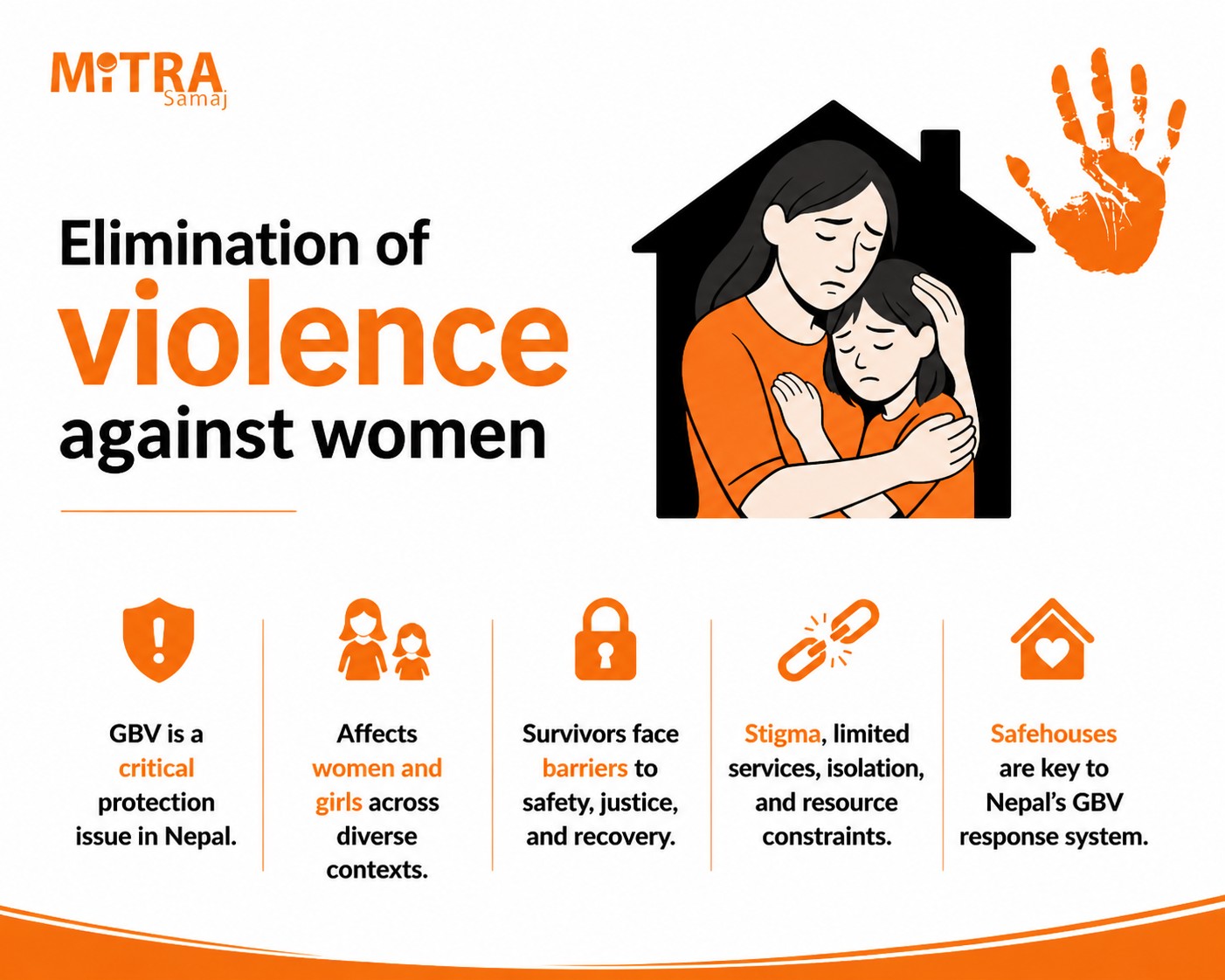
Gender-based violence continues to be a pressing protection concern in Nepal, affecting women and girls across diverse social, economic, and geographic contexts. Survivors often face multiple barriers to safety, justice, and recovery, including stigma, limited access to services, geographic isolation, and constrained local resources. Safehouses, also known as Shelter Homes, play a vital role in addressing these challenges by providing immediate protection, temporary accommodation, psychosocial support, case management, and referrals to essential services such as health care, legal aid, and livelihood support.
Nepal’s safehouse system is diverse, encompassing government-managed facilities, civil society–run shelters, and safehouses supported by development and humanitarian partners, including UNFPA. However, the quality, coverage, and accessibility of these facilities vary significantly across the country. Many shelters face challenges in providing consistent, survivor-centered care, particularly for marginalized groups such as Dalit and Indigenous women, adolescent girls, migrant women, and persons with disabilities.
To address these gaps, MITRA Samaj is implementing the GBV Safehouse Service Audit, a first-of-its-kind, national-level assessment designed to generate accurate, reliable, and comprehensive data on the coverage, quality, and operational readiness of safehouses across Nepal. The study will cover all seven provinces and 77 districts, systematically mapping existing facilities, assessing service availability and quality, evaluating infrastructure and human resources, and examining data management and coordination practices.
The assessment will adopt a phased approach:
- Phase 1: A national listing of all GBV shelters and safehouses, compiled from multiple sources, including government institutions, local authorities, NGOs, civil society organizations, and development partners. This phase establishes a verified national database that serves as the foundation for facility-level assessments.
- Phase 2: Detailed facility assessments using structured questionnaires and observation of infrastructure and operational features. The study will focus on ensuring accessibility, quality, confidentiality, inclusion of marginalized groups, and operational readiness, including preparedness for disaster situations. The aim is to cover up to approximately 300 facilities nationwide, with flexibility to ensure comprehensive geographic and service coverage.
Through this initiative, MITRA Samaj seeks to provide UNFPA, government partners, and other stakeholders with evidence-based insights to strengthen, standardize, and optimize the national safehouse network. The findings will guide future investments, capacity development, service standardization, and policy decisions, ultimately improving the safety, dignity, and recovery outcomes for survivors of GBV across Nepal.
MITRA Samaj is committed to implementing this study with the highest standards of accuracy, reliability, and ethics. We look forward to working closely with local authorities, service providers, and partners across the country to ensure the successful rollout of this critical assessment.
Together, we can strengthen Nepal’s GBV response system and ensure that every survivor has access to safe, dignified, and life-saving support.